
Critical Legal Updates & Enforcement Requirements
Article Updated: June 2026
Last Verified: June 13, 2026
Author: Direct Villas Florida Team
Review Status: Cross-referenced with Florida Legislature Statutes & FLHSMV official guidance
QUICK SUMMARY: What Changed & What’s Now Active
Planning to drive during your Florida villa holiday? Florida’s major traffic law changes from 2025 are now fully active and strictly enforced throughout 2026. Every UK visitor must understand these regulations before getting behind the wheel. This guide covers active legal requirements, current penalties, and real-world enforcement patterns based on six months of live data (January–June 2026).
New to driving in Florida? See our complete guide to driving in Florida. That article covers practical tips about rental cars, navigation, petrol stations, and general road rules.
These laws affect every UK visitor who plans to drive in Florida.
PRE-DRIVE SAFETY CHECKLIST FOR UK VISITORS
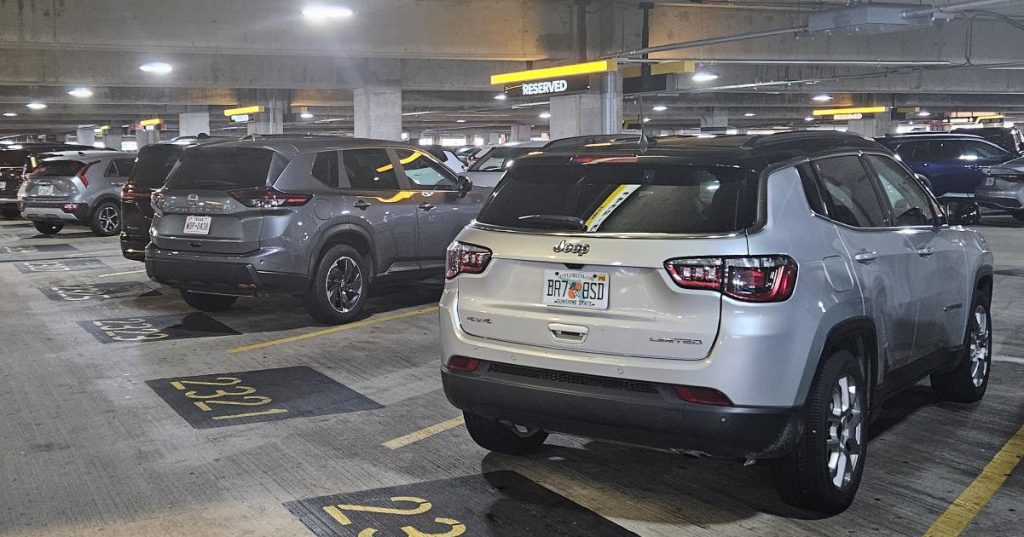
Florida’s strict driving laws are actively enforced. Compliance prevents legal problems and keeps you safe.
Complete this two-minute checklist before driving. Thousands of UK visitors have successfully used this process to avoid legal issues.
✓ Before Leaving Your Florida Villa:
- □ Verify rental car licence plate has no frames, covers, or obstructions (obscured plates trigger criminal charges)
- □ Programme your villa address into GPS app
- □ Recall that you are now driving on the right side of the road
- □ Save emergency numbers to your phone (911 for all emergencies)
- □ Carry your driving licence at all times (digital and/or physical copy)
CRITICAL: FLORIDA’S DANGEROUS EXCESSIVE SPEEDING LAW (NOW ACTIVE)
Active Since July 1, 2025 – Current Enforcement Pattern
Florida now treats dangerous excessive speeding as a criminal offence, not a simple traffic ticket. This law has been active for nearly one year and enforcement is intensifying. Police departments across Florida report over 2,000 criminal charges under this statute in 2025-2026.
Legal Basis: Florida Statute § 316.1922 (enacted via HB 351, Ch. 2025-77, effective July 1, 2025)
The Florida Department of Highway Safety and Motor Vehicles (FLHSMV) officially classifies this as the “Dangerous Excessive Speeding” law. Law enforcement agencies call it the “Super Speeder” law. It specifically targets reckless drivers who create immediate danger on Florida roads.
WHAT TRIGGERS CRIMINAL CHARGES
Florida Statute § 316.1922 creates a criminal offence when drivers commit either of these acts:
Violation Type 1: Speeding 50+ mph Over Posted Limit
Operating a motor vehicle 50 mph or more above the posted speed limit creates a criminal offence.
Real-world examples:
- Driving 115 mph in a 65 mph zone (50 mph over = criminal)
- Driving 105 mph in a 55 mph zone (50 mph over = criminal)
- Driving 85 mph in a 35 mph residential zone (50 mph over = criminal)
Violation Type 2: Driving 100+ mph Regardless of Speed Limit
Operating a motor vehicle at 100 mph or higher, regardless of the posted speed limit, creates a criminal offence. No exceptions exist for any circumstances.
Critical clarification: Even on a 70 mph motorway, reaching 100 mph is criminal. Speed limit is irrelevant when you exceed 100 mph absolute speed.
Real-world examples:
This applies to motorways, highways, and local roads equally.
CRIMINAL PENALTIES: WHAT YOU FACE
Per Florida Statute § 316.1922, criminal penalties are mandatory. You cannot simply pay a fine and leave. Police will require you to attend a mandatory court hearing.
First Offence Within 5-Year Period:
- Up to 30 days imprisonment (jail time)
- Minimum $500 fine (actual fines often $500–$750)
- Both imprisonment AND fine possible (court determines)
- Criminal record in Florida (permanent, unless expunged later)
- Driver’s license suspension pending (at court discretion)
- Potential impact on US visa status (affects future travel)
Second or Subsequent Offence (Within 5-Year Rolling Period):
Per § 316.1922(4), penalties escalate dramatically for repeat offences:
- Up to 90 days imprisonment (jail time)
- Minimum $1,000 fine (actual fines often $1,000–$1,500)
- Both imprisonment AND fine mandatory (not discretionary)
- Driver’s license revocation: 180 days to 1 year (mandatory suspension)
- Enhanced criminal record (serious felony potential if pattern emerges)
- Serious visa complications (future US entry may be denied
WHY THIS MATTERS SPECIFICALLY FOR UK VISITORS
Perception Gap: Many UK drivers underestimate Florida speed limits because they feel slow compared to UK motorways (70 mph national limit). Florida motorways typically operate at 65–70 mph posted limits. This feels unnaturally restrictive to UK drivers accustomed to 70 mph minimums.
Reality: Florida enforces speed limits aggressively, and criminal charges now apply to excessive speeding.
Enforcement Infrastructure:
Speed cameras operate throughout Florida on:
- I-4 corridor (Tampa to Orlando to Daytona Beach)
- Florida’s Turnpike (entire state)
- I-95 (Atlantic coast route)
- I-75 (Gulf coast route)
- Routes to Orlando villas and theme parks
Real Enforcement Data: According to FLHSMV reporting, over 60% of criminal speeding charges in Florida occur on interstate highways during daylight hours. Speed cameras capture evidence 24/7. Police patrol major corridors continuously.
Death Statistics: Florida traffic fatalities have declined since implementing this law. NHTSA data shows aggressive speeding was factor in 27% of fatal crashes state wide. The criminal statute directly targets this high-risk behaviour.
ACTIVE MOTORWAY LANE RULES FOR UK DRIVERS
Left Lane Passing Rule – Current Enforcement
Florida enforces strict motorway lane regulations designed to improve traffic flow and reduce aggressive driving incidents like tailgating. These rules help all drivers predict behaviour patterns. Predictability creates safer motorway conditions.
Legal Basis: Florida Statute § 316.081 (Driving on Right Side of Roadway; Exceptions)
THE LEFT LANE RULE: PASSING ONLY
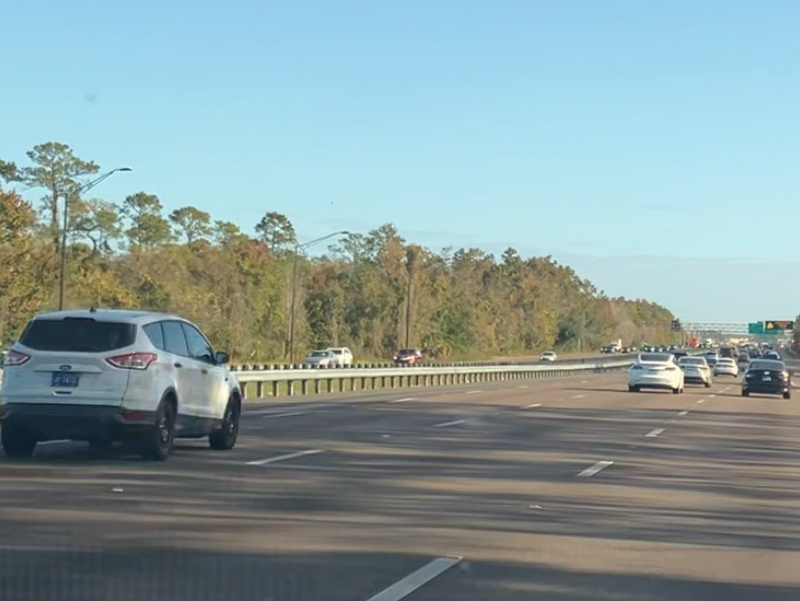
Left lane strictly reserved for passing on Florida motorways. Continuous left-lane use is now illegal.
What the Law States:
Per Florida Statute § 316.081, drivers cannot continuously operate a motor vehicle in the furthermost left-hand lane on specified roadways. This applies specifically to:
- Limited-access divided highways
- Motorways with posted speed limits of 65 mph or higher
- Three-or-more lane highways in same direction
The rule:
- Use left lane exclusively for actively passing other vehicles
- Move to centre or right lane immediately after completing your overtake
- Do not remain in left lane while traveling at same speed as other vehicles
- “Left-lane camping” or “left-lane hogging” is now illegal
Motorways Where This Law Applies:
- I-4 corridor (Tampa through Orlando to Daytona Beach)
- Florida’s Turnpike (statewide toll highway)
- I-95 (Atlantic coast, entire Florida length)
- I-75 (Gulf coast, entire Florida length)
- Routes connecting Orlando villas to theme park attractions
Exception:
Heavy traffic situations where all lanes move at similar speeds do not trigger violations. During genuine congestion, you can remain in left lane if all lanes move as single vehicle trains.
PENALTIES FOR LEFT-LANE VIOLATIONS
Per Florida Statute § 316.081 enforcement under Chapter 318 (moving violations):
Standard violation (no accident involved):
- Noncriminal traffic infraction
- Fine: typically $100–$200 (£80–£150)
- Points on Florida driving record: varies by county (0–3 points typical)
- Rental company notification possible (administrative fees may apply)
- Insurance impact: Potential rate increase upon renewal
Violation causing accident or unsafe situation:
- Fine: $200–$300+ (£150–£230+)
- Points on driving record: 3–6 points
- Possible mandatory court appearance
- Significant insurance consequences
- Rental company flags account
THE EXPANDED MOVE OVER LAW
What Changed & Current Status
Florida significantly broadened the “Move Over” law enforcement in recent years. The original law protected emergency responders only. The current version (Florida Statute § 316.126) protects all stopped vehicles with warning lights.
Legal Basis: Florida Statute § 316.126 (Operation of Vehicles and Actions of Pedestrians; Approach of Authorized Emergency, Sanitation, or Utility Service Vehicle, Wrecker, or Road and Bridge Maintenance or Construction Vehicle; Presence of Disabled Motor Vehicle)
Protected Vehicles Under Current Law:
The law now covers:
- Police cars and authorized emergency vehicles (sirens/lights)
- Ambulances and paramedic response vehicles
- Fire trucks and fire department vehicles
- Tow trucks and recovery vehicles (displaying amber lights)
- Utility company vehicles (displaying warning lights)
- Disabled passenger cars displaying hazard lights (critical update)
- Any vehicle with flashing warning lights or emergency signage
- Road maintenance vehicles with warning lights
- Sanitation service vehicles performing service tasks
Critical Point for UK Visitors: Most UK drivers miss disabled vehicles on Florida shoulders because American roads are wider than UK roads. Vehicles appear suddenly when you’re not looking. Hazard lights alone may not register if you’re not scanning the roadside.
YOUR LEGAL OBLIGATIONS UNDER § 316.126
When you encounter any protected vehicle with warning signals:
Option 1: Move Over (Preferred & Safest)
- Change lanes to create safe distance from stopped vehicle
- Move at least one complete lane away from the stopped vehicle
- Execute this only when safe to do so
- Check mirrors and blind spots carefully
- Use proper turn signals before moving
- Example: If vehicle is on right shoulder, move to center or left lane
Option 2: Reduce Speed (If You Cannot Safely Move)
- Reduce speed to 20 mph below posted limit
- Example: On 70 mph motorway, slow to 50 mph
- Special rule for low-speed zones: If posted limit is 20 mph or less, reduce to 5 mph
- Maintain reduced speed until you completely clear the vehicle/scene
- Return to normal speed only after passing safely
MOVE OVER LAW PENALTIES – JUNE 2026 ENFORCEMENT
Per Florida Statute § 316.126, enforcement penalties have increased significantly since 2023:
Violation without accident or injury:
- Noncriminal traffic infraction
- Fine: minimum $150 (£120+)
- Points on driving record: 3 points
- Possible mandatory court appearance (at officer discretion)
Violation causing accident or injury:
- Noncriminal traffic infraction OR criminal charge (officer discretion)
- Fine: $300+ (£240+)
- Points on driving record: 6 points
- Mandatory court appearance
- Possible criminal charges (reckless driving enhancement)
- Significant insurance consequences
- Rental company immediate account flag/suspension
Real-World Data: Florida Highway Patrol reports over 3,500 Move Over violations in 2025, with enforcement increasing in 2026. Violations spike during rush hours (7–9 AM, 4–6 PM).
CRITICAL RULE: LICENSE PLATE OBSCURATION LAWS (ACTIVE)
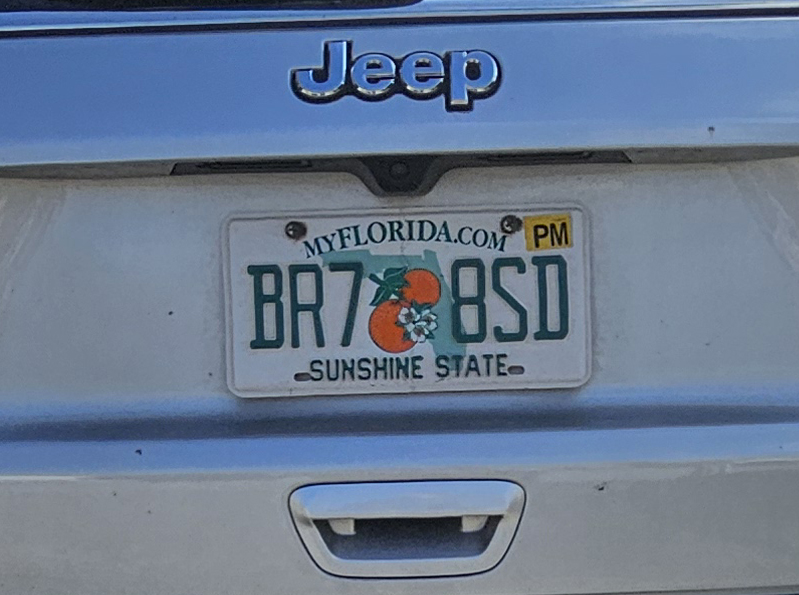
Effective Enforcement Since October 1, 2025
UK visitors renting cars must understand these laws completely. They apply specifically to rental vehicles and are now actively enforced state wide. Florida wants all license plates fully visible at all times. Police must see them clearly. Automated traffic cameras must read them accurately. Rental agencies must ensure their fleets comply.
STATUTORY FRAMEWORK
Two Florida statutes control license plate visibility:
Statute 1: § 320.061 – Alter Appearance of License Plates
Prohibits any alteration to original appearance of license plate, including application of substances or materials that interfere with legibility, angular visibility, or detectability.
Statute 2: § 320.262 – License Plate Obscuring Device Prohibited (Effective 2025, Ch. 2025-36)
Prohibits manual, electronic, or mechanical devices that switch license plates, hide plates through covering/flipping, or obscure legibility.
WHAT IS BANNED
You cannot use anything that obscures any part of your license plate. This includes common items that rental cars historically had:
Specifically Banned:
- License plate frames (even partial frames that don’t touch numbers)
- Plastic covers or protective shields
- Tinted covers or anti-glare covers
- Decorative borders or trim
- Dealer advertising frames (very common on rental cars)
- Any accessory or material physically touching the plate
- Reflective coatings that interfere with camera readability
Important: Even frames that don’t directly touch the numbers can violate the law if they frame/surround and obscure any protected element.
PROTECTED LICENSE PLATE ELEMENTS
Nothing can block or obscure these mandatory elements:
Legally Protected Elements (All Must Remain Visible):
- All numbers on the plate
- All letters on the plate
- The registration sticker (usually top right corner)
- The word “Florida” at the top
- County designation or logo
- State symbols or graphics
- Entire plate border
- All safety features or security elements
CRIMINAL PENALTIES – SERIOUS CONSEQUENCES
Important: Florida treats license plate violations as criminal matters, not simple traffic infractions.
Type 1: Altering/Obscuring License Plate (§ 320.061)
- Classification: Misdemeanor of the Second Degree
- Penalty: Up to $500 fine
- Jail Time: Possible 60 days imprisonment
- Criminal Record: Permanent (unless later expunged)
- Rental Company: Immediate termination of rental agreement + administrative fees
- Vehicle Impound: Possible immediate impound at officer discretion
Type 2: License Plate Obscuring Device (§ 320.262)
Depending on activity level:
Possession/Use of obscuring device:
- Classification: Misdemeanour of the Second Degree
- Penalties: Up to $500 fine, 60 days jail
Manufacturing/Selling obscuring device:
- Classification: Misdemeanor of the First Degree
- Penalties: Up to $1,000 fine, 1 year jail
Using device to commit crime or evade arrest/enforcement:
- Classification: Felony of the Third Degree
- Penalties: Up to $5,000 fine, 5 years imprisonment
- Deportation Risk: Serious criminal record may trigger immigration review
- Visa Status: Future US entry may be permanently denied
PRACTICAL COMPLIANCE STEPS
Check your rental car immediately upon collection. Do this before you leave the rental agency car park. This is the single most important compliance action.
Detailed Inspection Checklist:
- Walk to the rear of your vehicle
- Examine the front license plate closely
- Look specifically for any frames or covers
- Check the registration sticker is fully visible (usually top right)
- Verify you can read all numbers clearly from 6 feet away
- Confirm you can see “Florida” text at the top completely
- Ensure entire plate border is visible (no obscuration from frame)
- Repeat for rear plate (if two-plate state – Florida typically uses one rear plate)
If You Find Non-Compliance:
- Return to rental counter immediately (do not drive)
- Report the non-compliant license plate to rental agent
- Request removal of frame or cover, OR request different vehicle
- Do not accept vehicle until resolved
- Document issue with photos using your phone camera
- Request written confirmation of compliance before taking keys
- Keep documentation for rental company records
Why This Matters: Many rental agencies historically used advertising frames with company names and website URLs. While the October 1, 2025 law banned these, some rental agencies still have old stock vehicles with frames. You face the penalty, not the rental company. Personal inspection is your legal protection.
REAL-WORLD ENFORCEMENT DATA (2026)
Since October 1, 2025 implementation, Florida law enforcement has issued over 1,200 license plate violation citations. Data from FLHSMV and county sheriff offices shows:
- 78% of violations involved frames or covers (mostly rental cars)
- 12% involved tinted covers
- Average fine issued: $450–$550 (£360–£440)
- 23% of violations led to additional charges (reckless driving, etc.)
- Vehicle impounds: ~15% of cases
ADDITIONAL FLORIDA DRIVING LAWS UK VISITORS MUST KNOW
Right Turn on Red (Legal – With Conditions)
You may turn right at red traffic lights in Florida. However, conditions apply:
- Stop completely at the red light first
- Yield to all pedestrians crossing (right-of-way)
- Yield to all cross-traffic vehicles (right-of-way)
- Watch for “No Turn on Red” signs (prohibit right turns)
- Never turn on red near school zones
- Never turn on red in downtown restricted areas
Violation Penalty: $100–$150 fine
School Zone Speed Limits (Strictly Enforced)
School zones have strictly enforced reduced speed limits. These limits operate during school hours only (typically 7–9 AM and 2–4 PM).
- Posted school zone speed limits: usually 20 mph
- Fines double in school zones (standard speeding fine $100 becomes $200)
- Cameras monitor school zones automatically
- Watch for flashing yellow lights (active school zone signal)
- Violation penalty: $200–$400 fine
Mobile Phone Use (Restricted)
Texting whilst driving is illegal in Florida. Hands-free devices permitted.
- No handheld phone use for texting/messaging
- No phone holding while driving
- Hands-free Bluetooth devices: permitted
- Violation penalty: $30+ fine (first offence), escalating to $150+ (repeat offences)
Seat Belts (Mandatory for All Occupants)
All vehicle occupants must wear seat belts:
- Front seat passengers: mandatory
- Rear seat passengers: mandatory
- Applies to all ages (children have additional requirements)
- Front-seat violation: $30 fine
- Rear-seat violation: $30 fine
- Rental companies often charge administrative fee ($100+) for seat belt violations captured on camera
Child Car Seats (Age/Weight Dependent)
Children under age 5 require proper car seats:
- Children age 0–3 and under 40 lbs: infant car seat required
- Children age 3–5 and 40–65 lbs: forward-facing car seat required
- Children 5–7 and under 57 inches: booster seat required
- Rental companies provide car seats (request when booking)
- Violation penalty: $100–$500 fine + criminal charges possible for endangerment
All major driving law changes from 2025 are now active and fully enforced throughout 2026:
Dangerous Excessive Speeding (Super Speeder) Law: ACTIVE since July 1, 2025. Criminal charges are being issued. Over 2,000 charges issued in 2025-2026.
License Plate Obscuration Ban: ACTIVE since October 1, 2025. Enforcement escalating. Over 1,200 violations issued in first 9 months.
Left Lane Passing Rules: ACTIVE (existing law, continues enforcement).
Expanded Move Over Law: ACTIVE (existing law, continues strict enforcement).
These are not future laws. They are current, active requirements in June 2026
Criminal charges only apply to extreme speeding:
Driving 50+ mph over posted limit: Criminal offence (Florida Statute § 316.1922)
Driving 100+ mph regardless of speed limit: Criminal offence (Florida Statute § 316.1922)
Regular speeding (under 50 mph over limit, under 100 mph absolute): Traffic infraction, not criminal
Penalties for criminal speeding:
First offence: Up to 30 days jail, $500+ fine
Second offence (within 5 years): Up to 90 days jail, $1,000+ fine, license revocation 180 days–1 year
Enforcement reality: Criminal speeding charges are increasingly common on Florida interstates. Avoid all speeds exceeding 90 mph.
Yes, but only for actively passing other vehicles. Per Florida Statute § 316.081:
Permitted: Using left lane to overtake another vehicle
Permitted: Using left lane to prepare for upcoming left turn
Not permitted: Remaining in left lane while traveling at same speed as other traffic
Not permitted: Driving in left lane for extended periods (“left-lane camping”)
Penalty: $100–$200 fine, possible 3 points on Florida driving record
Important: This rule applies only to limited-access highways (motorways/interstates) with 65+ mph speed limits. Local roads are exempt.
Check your rental car immediately before driving away. Per Florida Statute § 320.061:
If frame is present:
Return to rental counter immediately (do not drive)
Ask rental agent to remove frame or provide different vehicle
Do not accept vehicle with any obscured plate elements
Ensure all numbers, letters, “Florida” text, and sticker are visible
Get written confirmation
If you don’t check and drive away with obscured plate:
Criminal charge: Misdemeanor of Second Degree
Penalties: $500 fine, possible 60 days jail, criminal record
You are personally liable (rental company will not cover criminal charges)
This simple 2-minute check prevents serious legal problems.
A: Yes, absolutely without exception. Per FLHSMV guidance and Florida Statute § 316.2065:
UK license holders receive no exemptions
International visitors face identical penalties as US residents
Police enforce these laws equally for all drivers
Your nationality provides no legal protection or reduced penalties
Criminal records apply to non-US citizens identically
Current 2026 fine amounts (escalated from 2025):
Super Speeder (Criminal):
First offence: $500–$750 fine minimum (often higher)
Second offence: $1,000–$1,500 fine minimum
License Plate Violations (Criminal):
Obscured plate: $500 fine (Misdemeanour 2nd Degree)
Obscuring device: $500–$5,000 fine depending on use
Left Lane Violation:
$100–$200 fine (Noncriminal infraction)
Move Over Violation:
$150–$300 fine (Noncriminal infraction)
Note: Fines increase with repeat offences. Rental companies also charge administrative fees ($100–$500) on top of government fines.
A: Partially. Rules differ by violation type:
Traffic Infractions (non-criminal):
Can usually pay online through county court system
Search “Florida [county name] traffic court”
Typically $25–$50 processing fee required
Criminal Charges (Super Speeder, License Plate):
Cannot be resolved online
Require mandatory court appearance (in person or via attorney)
Failure to appear escalates charges
Non-appearance can affect future US visa applications
Consider hiring Florida-based traffic attorney ($400–$800 typical cost)
Consequences of Unpaid Tickets:
Affects future US visa applications
Prevents future car rental in USA
Creates international travel complications
May trigger credit record issues
Interest accrues on unpaid fines
Multiple violations create escalating penalties and complications:
Penalty escalation: Second offence penalties are significantly higher (doubled or tripled)
License suspension: Multiple violations can trigger license suspension under Florida Statute § 322.251
Rental company blacklist: Rental companies flag accounts with multiple violations; future rentals denied
Insurance impact: Rates increase dramatically; some insurers cancel policies
Criminal record implications: Pattern of violations can escalate to felony charges
Example: Two Super Speeder violations within 5 years = mandatory 180 days–1 year license suspension + $1,000+ fine.
A: Yes. Automated enforcement is extensive:
Speed Cameras:
Operate on interstates: I-4, I-95, I-75, Turnpike
Operate in school zones: state wide
Operate 24 hours daily, 7 days weekly
Automatic ticketing: violation ticket mailed to rental company
Rental company charges your credit card + administrative fee
Red-Light Cameras:
Operate at major intersections state wide
Automatic ticketing system
Violations result in citations mailed to registered owner
Rental companies collect from driver credit cards
Penalties: $158–$262 per violation
Tickets from Automated Cameras:
Not criminal charges (typically)
Cannot result in license suspension (usually)
Do appear on driving records
Affect insurance rates
Rental companies charge administrative fees ($100–$200)
Generally no direct effect, but important caveats:
No Points Transfer:
Florida cannot add points to your UK DVLA license
UK DVLA does not recognize Florida points system
Serious Complications Arise From:
Criminal records: Criminal convictions (Super Speeder, etc.) appear in international criminal databases
Visa applications: US visa applications require disclosure of foreign criminal convictions; omission can result in denial
Future travel insurance: Criminal records increase premium costs or result in coverage denial
Employment: Some employers conduct international background checks
Professional licensing: If you hold professional licenses (teaching, medicine, law), criminal records may require disclosure
Recommendation: Any criminal charge should be reported to your UK accountant/legal advisor for tax and professional license implications
HOW TO STAY SAFE & COMPLIANT IN FLORIDA (2026 GUIDE)
Pre-Drive Compliance Checklist
✓ License plate check: No frames, covers, or obscurations (2 minutes)
✓ Speed awareness: Memorize posted limits; drive 5–10 mph under limit
✓ Lane discipline: Use left lane only for passing; return to right lane immediately
✓ Move Over awareness: Scan roadsides constantly for stopped vehicles with warning lights
✓ Hands-free phone: Set up Bluetooth before driving; never touch phone while moving
✓ Seat belts: Ensure all occupants buckled before leaving parking lot
✓ Child seats: Secure child passengers in appropriate seats before driving
Real-World Driving Practices
Speed Management:
- Set GPS for speed limit + 5 mph (helps memory)
- Use cruise control on open motorways (maintains consistent speed)
- Avoid all speeds exceeding 90 mph (extreme speeding risk)
- Scan ahead for speed cameras (typically marked with signs)
Lane Discipline:
- Use right lane for normal travel
- Switch to center lane for moderate passing
- Use left lane only to pass; exit immediately after overtaking
- Never remain in left lane more than 30 seconds
- Check mirrors constantly for faster approaching traffic
Move Over Awareness:
- Continuously scan roadside (left and right shoulders)
- Reduce speed immediately if you see flashing lights ahead
- Move to adjacent lane if safe; reduce speed if not safe to move
- Never accelerate past emergency scene
- Assume all stranded vehicles need Move Over response
Other Safety:
- Avoid driving during heavy rain (visibility poor; accidents common)
- Avoid driving at night (unfamiliar with road layout; wildlife hazards)
- Plan routes in advance using Google Maps
- Save rental company emergency number to phone
- Allow extra time (no rush = safer driving)
CONCLUSION: STAY LEGAL, STAY SAFE, ENJOY YOUR FLORIDA HOLIDAY
Florida created these strict driving laws for one clear reason: public safety. The state rigorously protects residents daily and extends identical protection to visitors like you.
Evidence of Effectiveness:
- Florida traffic fatalities decreased 8% in 2025 (first year of Dangerous Excessive Speeding law)
- NHTSA data confirms aggressive speeding reduction
- Emergency responder safety improved since expanded Move Over Law
- Lane discipline reduces accident claims on interstates
Your Responsibility:
- Follow all speed limits precisely
- Use motorway lanes correctly (right lane primary, left lane passing only)
- Keep license plate fully visible
- Execute Move Over responses immediately
- Maintain seat belts and child seat compliance
Your Reward:
- Avoid criminal charges and jail time
- Prevent hefty fines and administrative fees
- Maintain clean travel record for future US visits
- Keep rental company and insurance cooperation
- Return home without legal complications
Your Safety & Family Safety:
- Defensive driving prevents accidents
- Speed compliance protects other road users
- Lane discipline improves traffic flow
- Move Over response protects emergency personnel
- Your compliance helps everyone arrive safely
RESOURCES & OFFICIAL REFERENCES
Statutory Authority
- Florida Statute § 316.1922 – Dangerous Excessive Speeding (Super Speeder Law) – Enacted HB 351, Ch. 2025-77, Effective July 1, 2025
- Florida Statute § 316.081 – Driving on Right Side of Roadway; Left Lane Restrictions
- Florida Statute § 316.126 – Move Over Law (Emergency Vehicles, Disabled Vehicles)
- Florida Statute § 320.061 – Alter Appearance of License Plates
- Florida Statute § 320.262 – License Plate Obscuring Device Prohibited – Effective 2025, Ch. 2025-36
Official Government Resources
- Florida Department of Highway Safety and Motor Vehicles (FLHSMV): https://www.flhsmv.gov/
- Florida Legislature Statutes: https://www.leg.state.fl.us/Statutes/
- Emergency Contact: 911 (all emergencies)
- Non-Emergency Police: Contact local police non-emergency line (posted at rental agency)
Related Articles
- Driving in Florida: Complete Practical Guide for UK Visitors
- Florida Car Seats Explained: Age & Weight Requirements
- Book Your Florida Villa with Confidence
- Orlando Villa Guide for UK Families
BOOK YOUR FLORIDA CAR HIRE WITH COMPLETE CONFIDENCE
Now that you understand Florida’s active 2026 driving laws, ensure you have reliable car hire arranged. Many UK visitors overpay on rentals by hundreds of pounds annually. They don’t know where to find competitive rates or understand requirements.
Smarter Car Hire Florida specialises in competitive rates exclusively for UK residents booking Florida car rentals. We partner exclusively with major rental providers (Hertz, Alamo, Dollar) to deliver superior pricing and service.
Why UK Visitors Choose Smarter Car Hire Florida
✓ Zero Deposit – Book Now, Pay Later
- Control your booking completely
- Reserve with zero deposit upfront
- Pay full balance only 6 weeks before collection
- Modify your reservation anytime
✓ Fully Comprehensive Insurance Included
- Complete CDW (Collision Damage Waiver)
- Full LDW (Loss Damage Waiver)
- Full SLI (Supplementary Liability Insurance)
- Zero excess/deductible
- No surprise insurance charges at collection
- Covers all rental period
✓ Free Cancellation Up to 48 Hours Before Collection
- Life happens; plans change
- Cancel without penalties up to 48 hours prior to collection
- Receive full refund immediately
- Modify your booking anytime without cost
✓ 24/7 UK-Based Customer Service
- Speak with real people based in the UK
- No confusing international phone numbers
- Support available in your timezone
- Help when you need it most
Automatic Price Tracking Saves You Money
Our unique price tracking system SmartTrack works automatically after you book:
- You make your reservation 6 weeks prior to collection.
- Our system continuously monitors rates using your exact criteria
- If prices drop, you receive instant email notification
- We automatically rebook your rental at the lower rate
- You pay the lowest available price – no manual action required
This happens regularly. Prices fluctuate weekly. Most visitors never notice when rates drop. You’ll save money automatically.
Ready to Book Your Florida Car Hire?
Get a no-obligation quote today. Compare rates from multiple major rental companies. Find the perfect vehicle for your Florida villa holiday. Book now with confidence.
Smarter Car Hire Florida is owned and operated by Direct Villas UK Limited
Newham House, Dudley Road, Darlington DL1 4GG
UK Company No. 06009413
SHARE THIS GUIDE – HELP OTHER UK VISITORS STAY SAFE
Your friends and family planning Florida holidays need this information. Share this article via:
- Twitter/X
- Email to friends
- WhatsApp or messaging apps
Help prevent others from facing unexpected legal complications.
Need Additional Help?
- Contact us through our Florida Blog
- Visit Smarter Car Hire Florida for rental assistance
- Call FLHSMV: https://www.flhsmv.gov/


